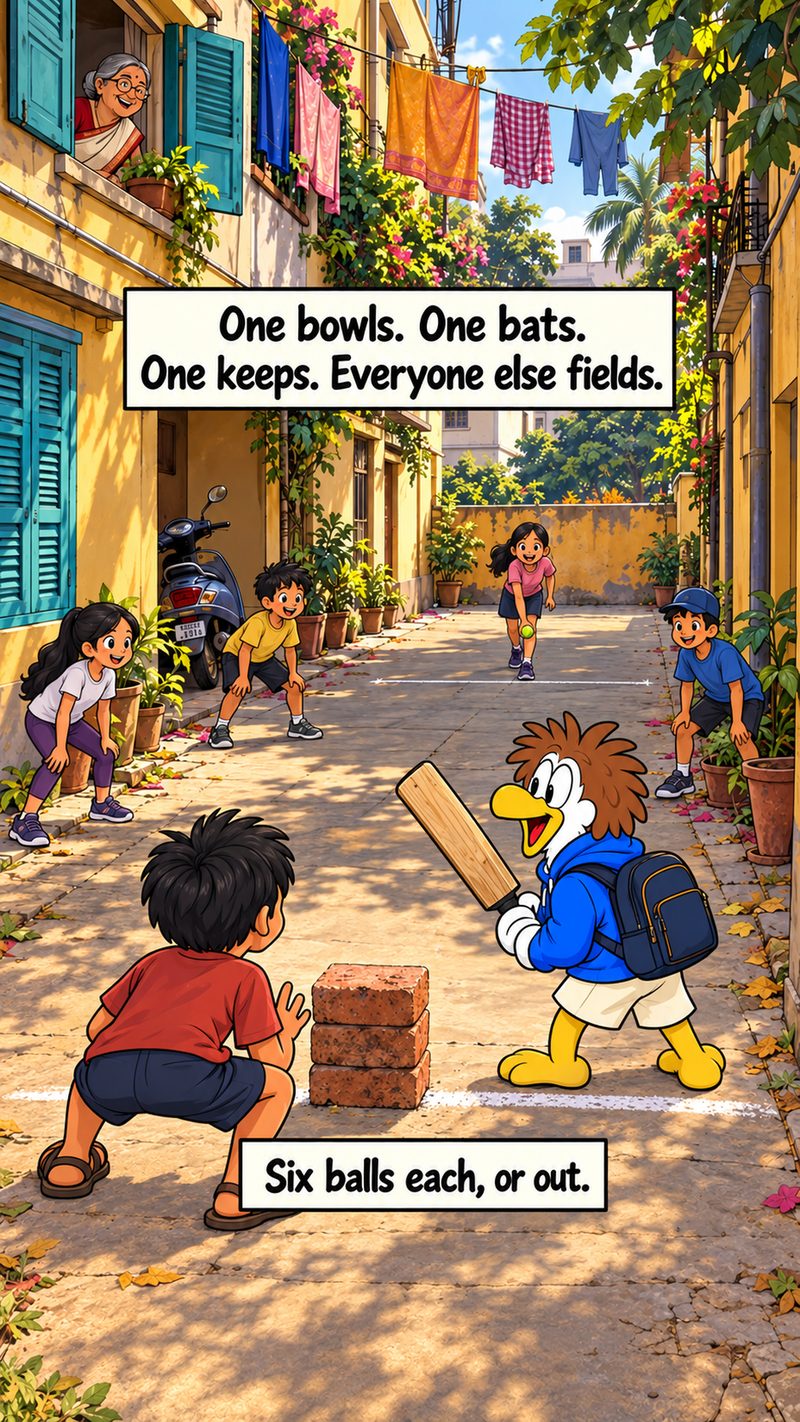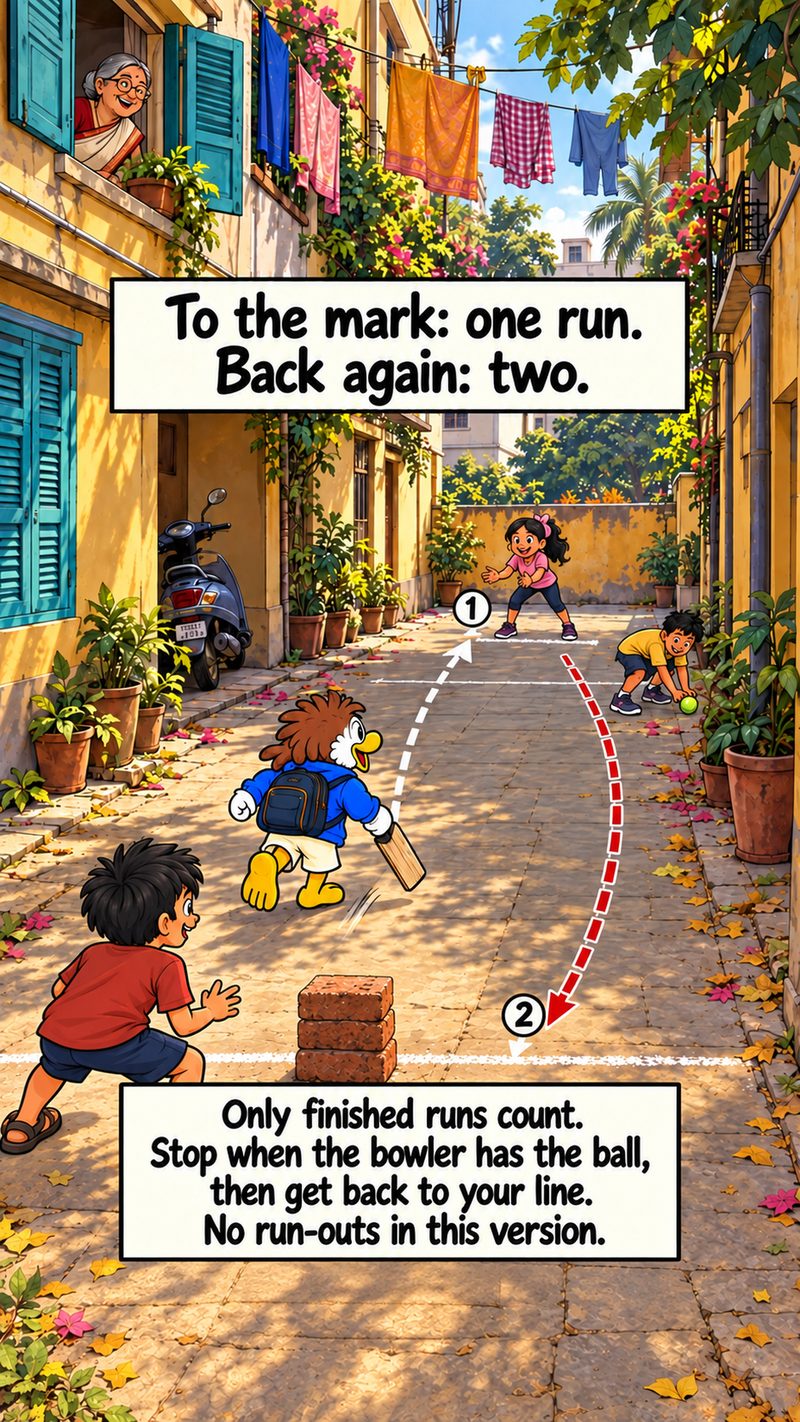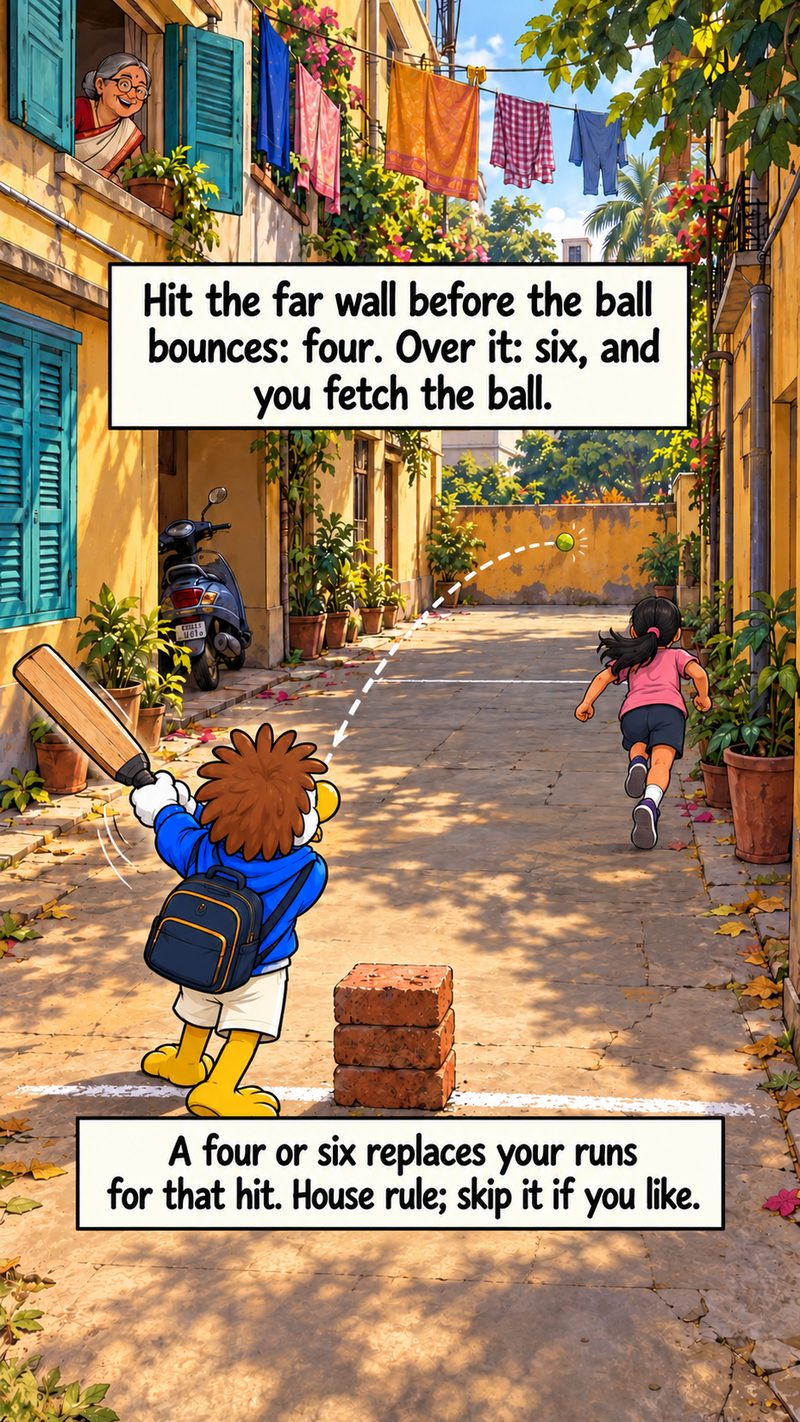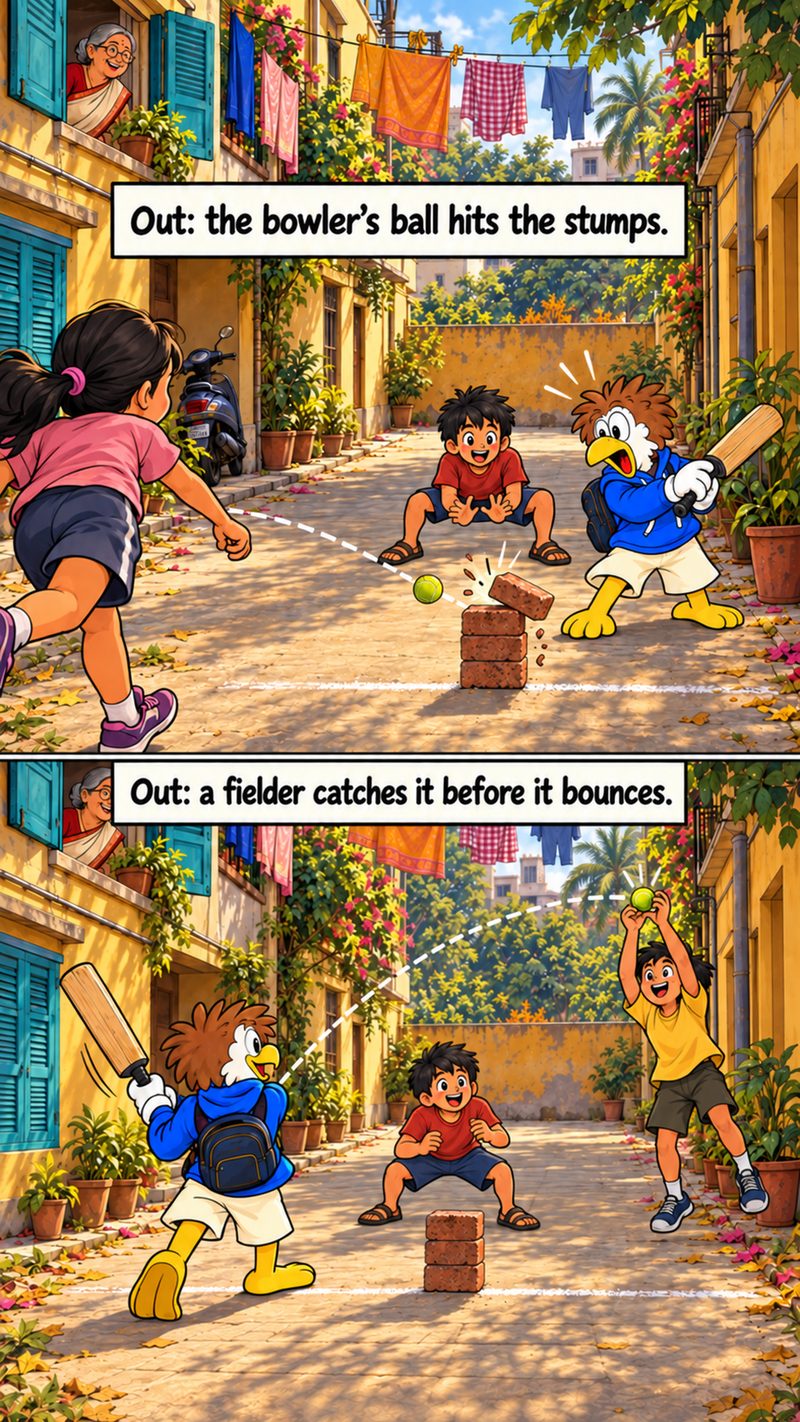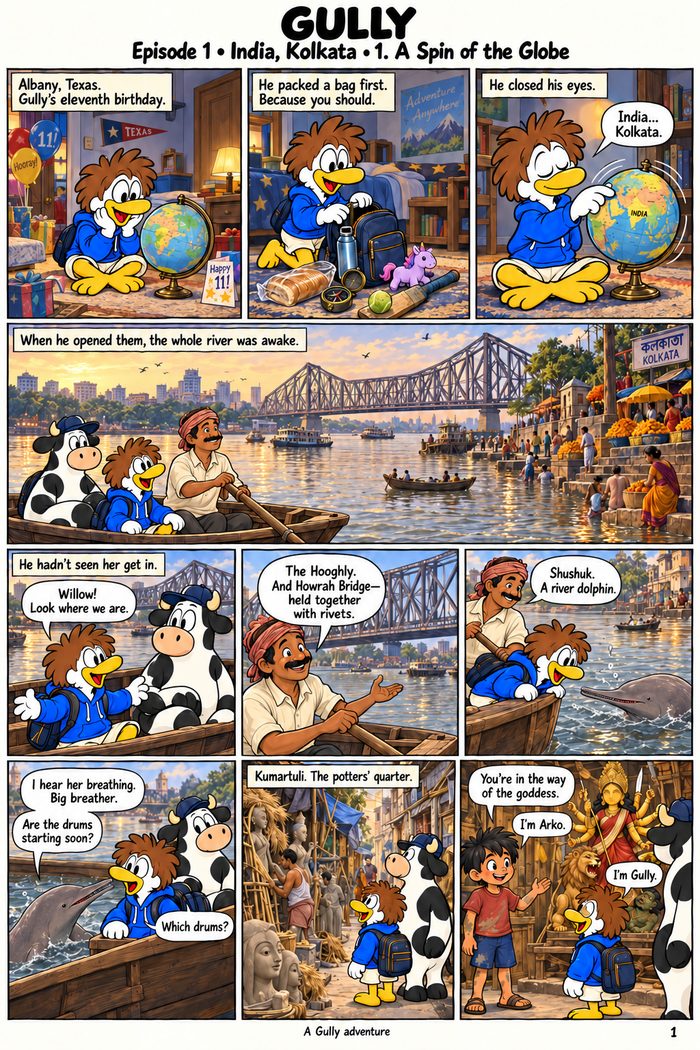
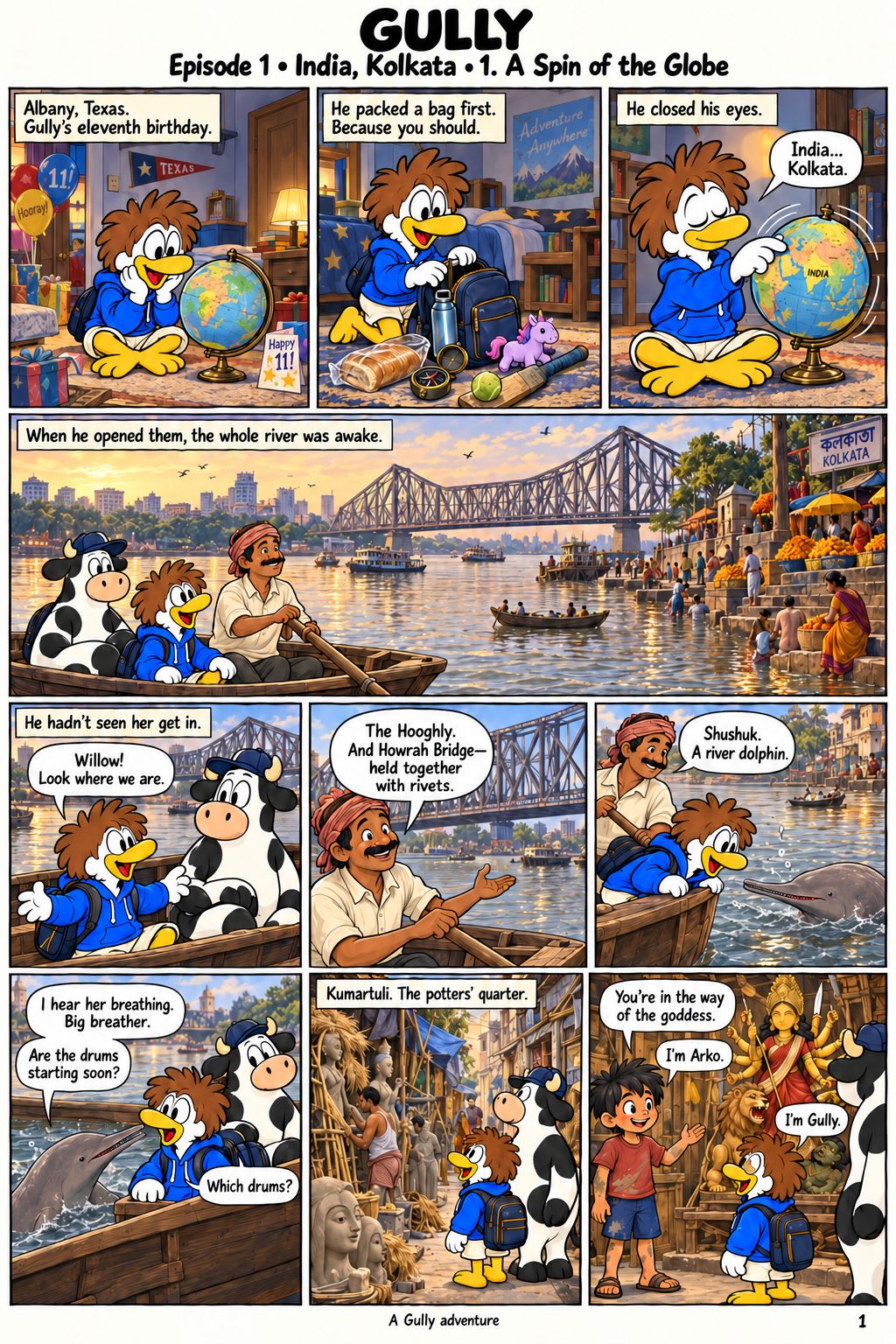
Today was Gully's eleventh birthday, and he had been given the greatest present an eleven-year-old could get. A globe. A real one, on a stand, that spun. He'd never seen the world like this before, all at once, with the blue bits and the green bits and the names, and he'd spent the whole party wanting to be alone with it. There'd been cake, and the backyard game of Pavilion with everyone from the street, and candles he'd blown out while wishing for something he couldn't have put into words, and now at last the door of his room was shut and the globe was on the rug in front of him and the house in Albany, Texas, population two thousand, had gone quiet.
He packed a bag first, because you should. A water bottle. Some bread. His sister's small purple unicorn, because if there were sisters where he was going they might like it. His grandfather's compass. His mother's favourite brooch, the one with the blue stone, in case he met someone who could make her another. His father's watch, to know the time. And at the bottom, first in, his cricket bat and a ball, because wherever he ended up there'd be somewhere to play. Then he sat down cross-legged on the rug, put one finger on the globe, shut his eyes, and spun it.
When it stopped, his finger was on India. He leaned in. Kolkata, it said, in the east, where a great river came down to the sea. Gully looked at the word for a long time. Then he closed his eyes again, and when he opened them he wasn't in his room.
He was in a boat. A small wooden one, with a man at the oars, on a river so wide and so brown and so full of everything that for a moment he forgot to breathe. It was dawn, and the whole river was awake. Steps came down into the water from both banks, and on every step there were people: washing, bathing, praying, filling pots, scrubbing clothes, drying saris in long bright stripes along the stone. Boats like his went up and down loaded with sacks and flowers and people. Two kids leapt off a ghat into the water in front of him, shrieking, and came up laughing. And ahead, over all of it, stood a bridge, a huge grey steel bridge hanging in the air with no legs in the water at all, and under it, right down at the waterline, a smear of colour so bright Gully thought it was a fire. Flowers. Thousands and thousands of marigolds and roses in heaps, and two thousand people selling them under the girders of the bridge as the sun came up. Gully, who had seen a lot of sunrises in Albany, Texas, had never seen anything like this in his life, and when he turned to say so, Willow was sitting in the back of the boat.
He hadn't seen her get in. Nobody ever did. She was just there, as she always was, with her hat on, watching the river with the look she had, and Gully felt the way you feel when your best friend turns up. Willow, he said. Look where we are. Willow looked. The boatman, who had not reacted in any way to a cow appearing in his boat, said: Hooghly. Ganga. The river that made the city. He nodded at the bridge. Howrah Bridge. No nuts, no bolts. All rivets. And it breathes, he said, with the air of a man passing on a secret. It grows a metre in the heat of the day and shrinks again at night. Gully looked up at the bridge and tried to see it breathing. And then, three boat-lengths off, something broke the surface of the brown water, grey and smooth, blew, and sank again.
What was that? Gully said. The boatman smiled. Shushuk, he said. River dolphin. You are lucky. Not many left. The water right beside the boat bulged, and a long thin snout came up, and a small eye that didn't seem to be looking at anything, and a voice that sounded like it came from under a blanket said: I heard you a mile off. New voices. Gully stared. You're a dolphin, he said. In a river. Shushuk, said the dolphin. It's what they call us here. I can't see you, so don't bother waving. I hear you. She turned her blind head to Willow, who was leaning over the side. And I hear her breathing. Big breather. Then, with a sort of sigh: are the drums starting soon? Which drums? said Gully. But she'd gone, a grey back and a flick and nothing but river. The boatman pulled for the eastern bank, toward a ghat where the steps were grey with old clay, and said: Kumartuli. Where the gods are made.
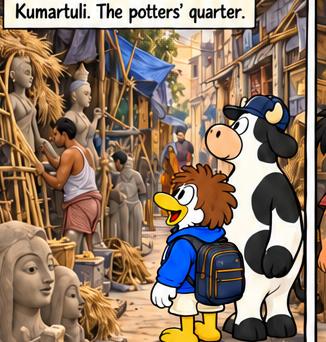
Kumartuli was a maze. The boat put them off at the bottom of a lane so narrow Willow had to go sideways, and the lane opened into another lane, and another, and every lane was lined with workshops open to the street, and every workshop was full of gods. Hundreds of them. Some were just skeletons of bamboo and straw tied with string, standing in rows like scarecrows. Some were grey clay, smooth and faceless, drying in the shade. Some were painted and gold and dressed in red and white silk with ten arms each, holding ten different things, riding lions, three times taller than Gully, waiting with their eyes shut for somebody to come and collect them. Men in vests worked on them with their hands, smoothing clay, pressing fingers into fingers, tying hair. The air smelled of wet earth and straw and paint. Gully walked through it with his beak open. He had never seen anything made like this, this big, by hand, in a street.
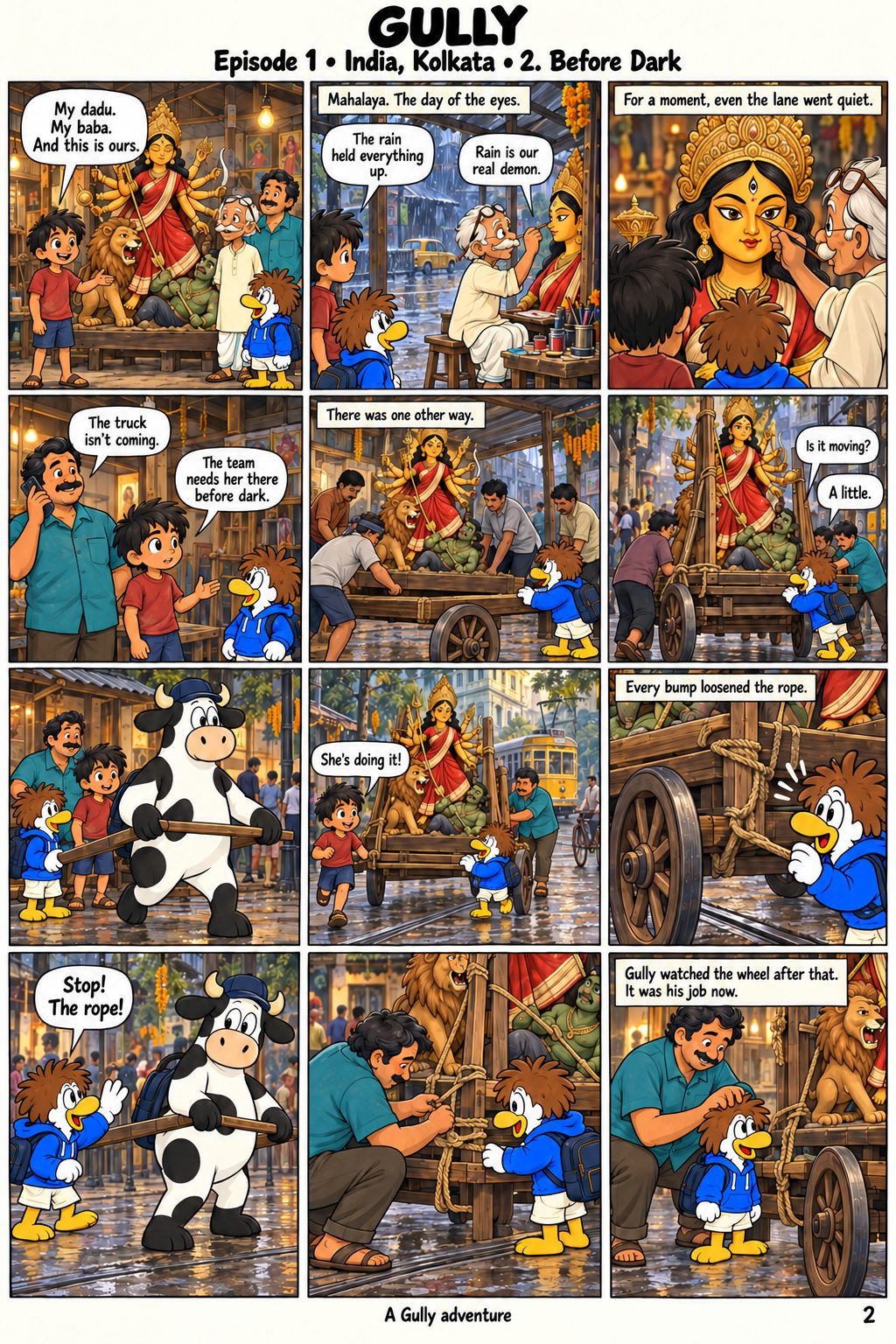
The workshop at the end of the lane had a boy in it about Gully's size with clay up to both elbows, and the boy looked at Gully, and looked at Willow, and said, in English, you're in the way of the goddess. Then he grinned. I'm Arko. That's my dadu, my grandfather. That's Baba. And this, he said, stepping aside, is ours. The idol in the middle of the workshop was Durga, Gully would learn, a goddess with ten arms riding a lion, and she was finished, or nearly. Painted. Dressed. Everything except her eyes, which were two smooth blank ovals of clay. Today, Arko said, pointing at the eyes. Today's the day. Mahalaya. Dadu paints the eyes today and then she's alive and then she goes to her pandal. His grandfather was a small man with a white moustache and glasses pushed up on his forehead and a brush behind his ear, and he was standing in front of the goddess with his hands behind his back, not moving. What's he waiting for? Gully whispered. Arko's face changed. For her to be dry, he said. It rained last night. His grandfather, without turning round, said something in Bengali, and Arko translated: Rain is our real demon. Baba, a big patient man at the back of the workshop, was on his phone. He put it down and said, also in English, for Gully's benefit: and the truck isn't coming.
It was the busiest week of the year in the busiest lane in the city, and the truck that was meant to carry their goddess across Kolkata to the Maidan had been taken by somebody else's goddess, and no other truck would be free before dark, and she had to be in her pandal before dusk, because at dusk the priest came to welcome her, and the priest, Arko said, does not wait, not for trucks, not for anyone. Arko explained this fast, walking in circles. Everyone in the lane had the same problem; everyone in the lane was shouting into a phone. Dadu waited. The goddess dried. And somewhere around the middle of the morning, when the clay had gone from dark grey to pale grey and Dadu touched her cheek and nodded, he took the brush from behind his ear, dipped it in black, and climbed a short ladder, and the whole lane went quiet, because this was the thing you stopped for. He painted the left eye in one stroke. Then the right. Then a third, between the brows. And Durga, who had been a very beautiful lump of river clay a second ago, looked down at Gully. Gully stepped back into Willow. Arko breathed out. Now she's ours, he said. Now we have to move her.
The handcart was Baba's idea, and it was a bad one, and it was the only one. A flat wooden cart with two bicycle wheels, the kind the lane used for bamboo. They lifted her onto it, six men and Gully, straw cushioned under the lion's feet, and roped her upright, and Baba took the handles and pushed, and the cart did not move, because the cart with a goddess on it weighed what a goddess weighs. He pushed again. Arko pushed. Gully pushed. The cart moved about the width of a hand and stopped. And then Willow walked round to the front, turned her back to the cart, and stood there, and waited, until Arko, understanding something, found a rope, and ran it from the cart to her, and Willow leaned, and the cart rolled. Baba laughed out loud. Arko said a word in Bengali that Gully later learned was not a word you say in front of grandfathers. And out of the lane and into the city, with a goddess on a cart and a cow in front, they went.
Kolkata, Gully discovered over the next four hours, is a city you can push a goddess through, because in that week everyone else is doing it too. They came out of the lanes onto a wide road full of yellow taxis, every one of them the same old round-shouldered car, honking, and the cart rolled onto tram tracks set into the road, and a tram came past them, green and yellow, clanking down the middle of the street, so close Gully could have touched it. There used to be trams everywhere, Arko said. Now there's two routes. Ride one before they're gone. It was on the tracks that Gully saw it. The back wheel on his side kept dropping into the rail groove and bumping out again, and every bump the rope that held the lion's hind legs to the cart slid a finger's width down the post. He watched it slide three times. Then he shouted stop. Baba stopped. Willow stopped. The whole road behind them stopped, and honked. Gully pointed. The rope was hanging by a loop, and the goddess, ten arms and a lion, was leaning very slightly to the left over the tram tracks. Baba looked at the rope, and looked at Gully, and said nothing at all, and got down and re-tied it, hard, with Gully holding the lion's foot, and when he stood up he put a hand on Gully's head for a second and left it there. Then they rolled on, off the tracks and onto the road, and Baba kept the wheel out of the groove for the rest of the way, and Gully walked beside the back wheel and watched it, because that was his job now.
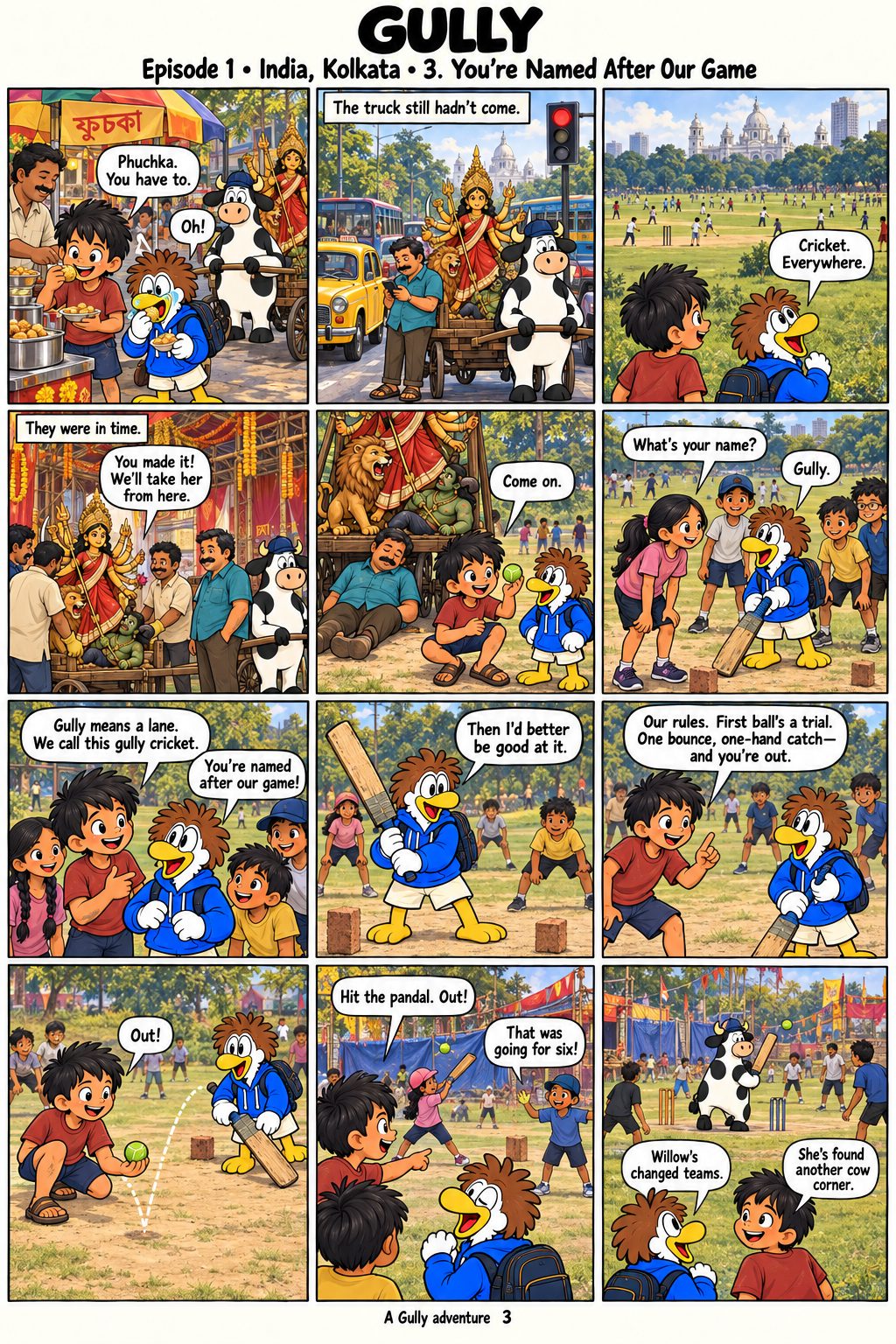
At the next corner there was a man with a basket of crisp hollow balls, and Arko, who had money, held up two fingers. Phuchka, he said. You have to. The man cracked one open with his thumb, filled it with potato and a sour spicy water, and put it straight into Gully's mouth before it could leak. Gully's eyes watered so much that Willow stopped pulling to look at him. Arko ate six without blinking. Then a red light, and the cart stood behind a yellow taxi with a goddess's ten arms swaying above the traffic, and Baba, in the stopped cart's shade, checked his phone to see where the truck had got to, and shook his head, and put it away. And they rolled on, south, toward the green.
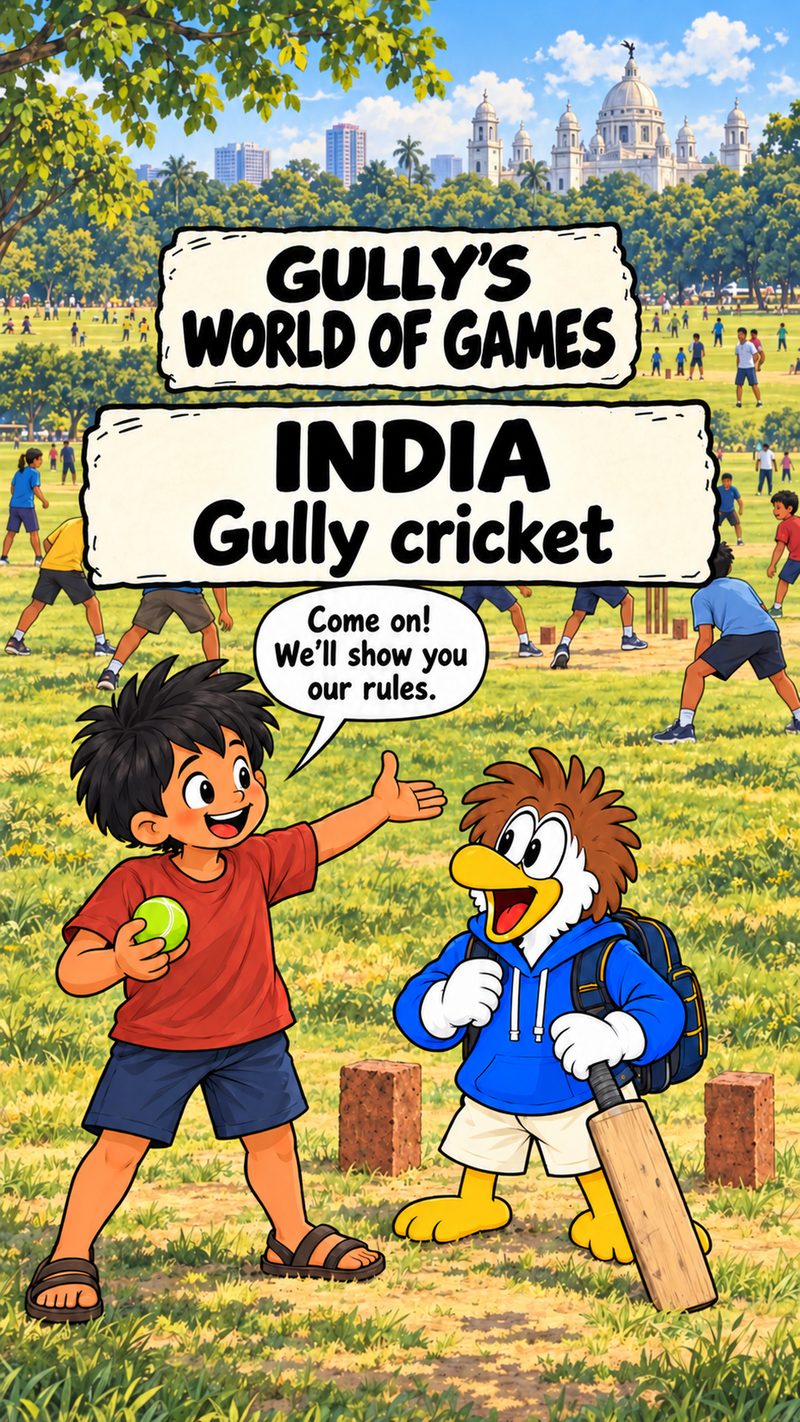
The Maidan is the biggest open space in Kolkata, three kilometres of grass in the middle of the city, and when they came out onto it in the afternoon with the cart, Gully stopped pushing and simply looked. Cricket. Everywhere. Dozens of games at once, pitches side by side so close that a fielder from one match stood in the outfield of the next, boys in whites and boys in school shirts and men in vests, bricks for stumps, real stumps, a dustbin for stumps, tennis balls and leather balls and taped-up balls, and the sound of a hundred bats on a hundred balls all going at the same time like applause that never stopped. Far away across the grass, the great grey bowl of a stadium. Eden Gardens, Arko said, not even looking. The most famous ground in India. One day. He said it the way you say a fact. Their pandal was on the edge of the grass, a palace of bamboo and cloth and lights, and the men on the scaffolding saw the cart and cheered, because she was there, in time, with the sun still well up, and the priest not due for an hour. They weren't quite ready for her inside. So the men took the rope from Willow and parked the goddess in the shade of the pandal where she'd be safe, and Baba lay down under the cart and went to sleep with the relief of a man whose truck never came, and Arko took the ball out of his pocket, and said, come on.
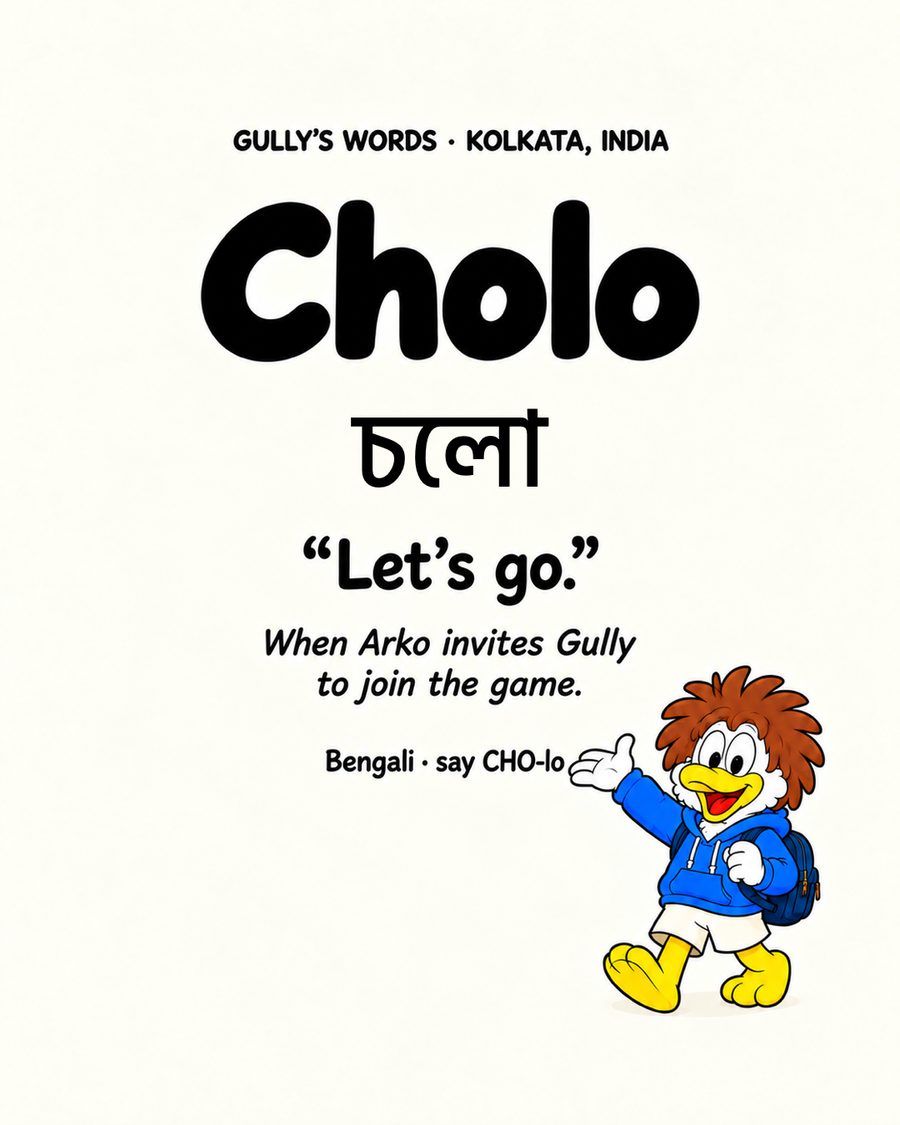
The nearest game had six players and needed more. They were about Gully's age and they had two bricks for stumps and a tennis ball and a bat that was mostly tape. Arko said something and they shifted round to make room, and the biggest one looked at Gully and said, what's your name? Gully, said Gully. And the entire game stopped. Six faces. Then one of them laughed, and then they all laughed, and Gully stood there not knowing why. Arko was grinning at him. Gully, he said. Gali. It means a lane. A little street. And this, he waved his arm at the brick stumps and the tape bat and the whole Maidan full of games, this is gully cricket. Street cricket. It's what every kid in India plays. That's what this is. You're named after our game. Gully looked at the bricks. He looked at the tape bat. He looked at a hundred games going on around him, and something in his chest did a thing he couldn't have described. Well, he said, then I'd better be good at it.
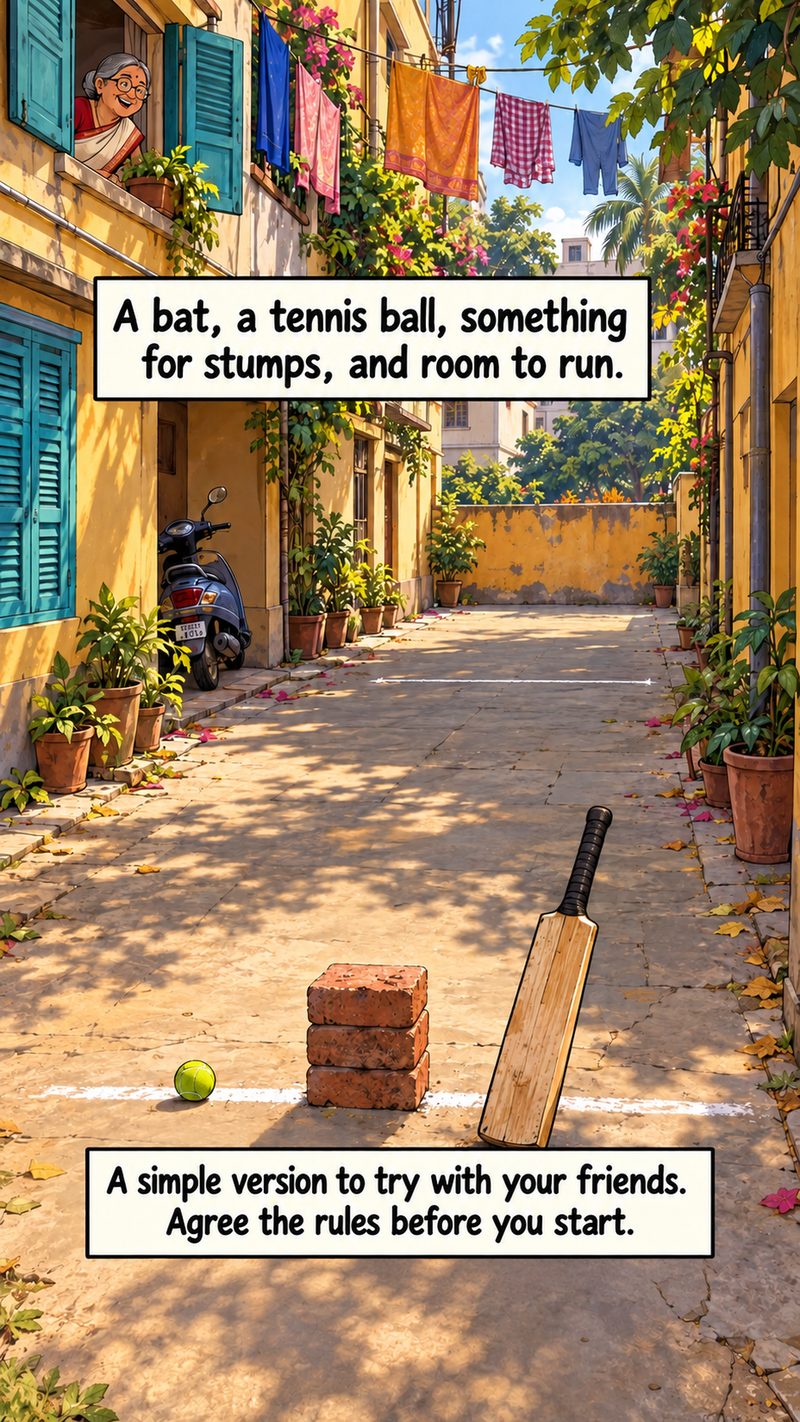
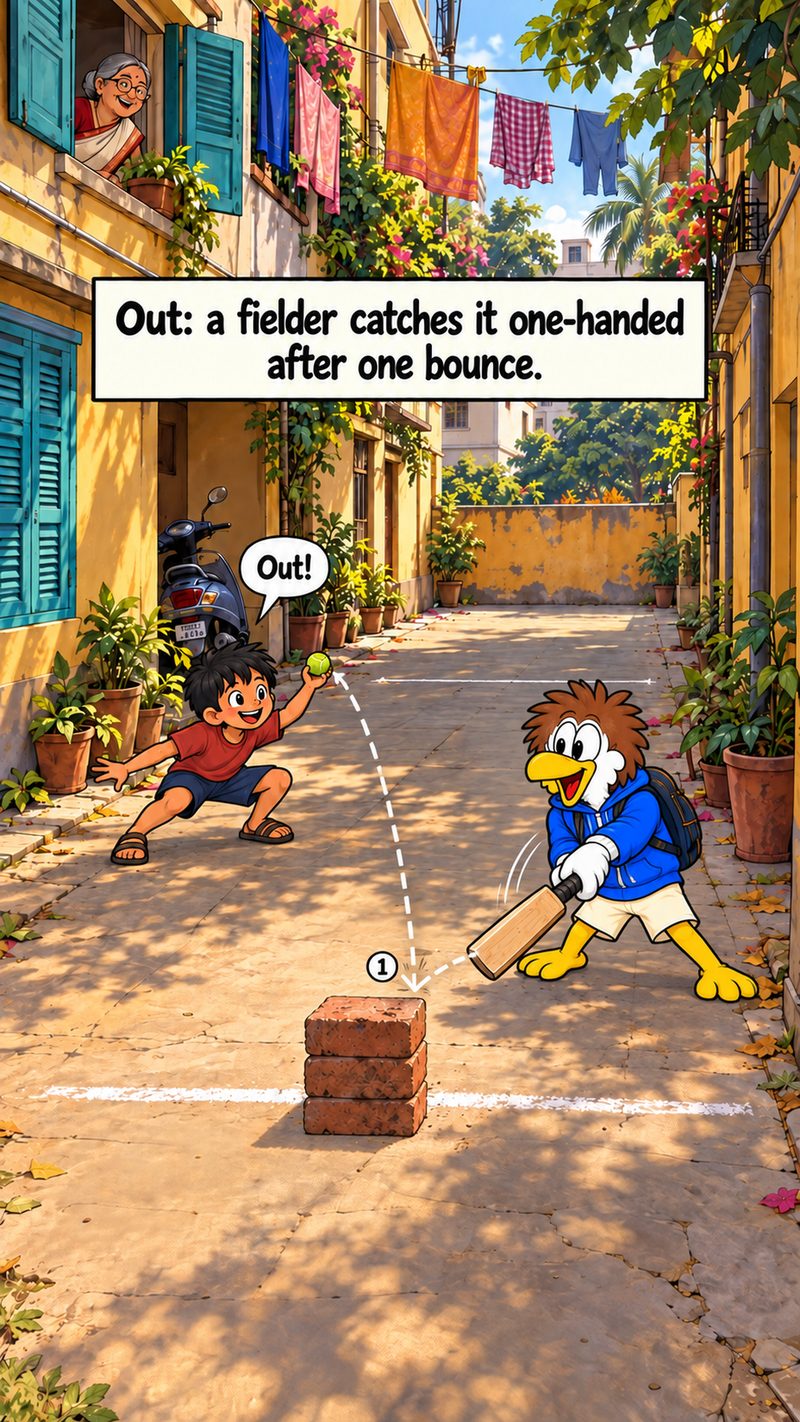
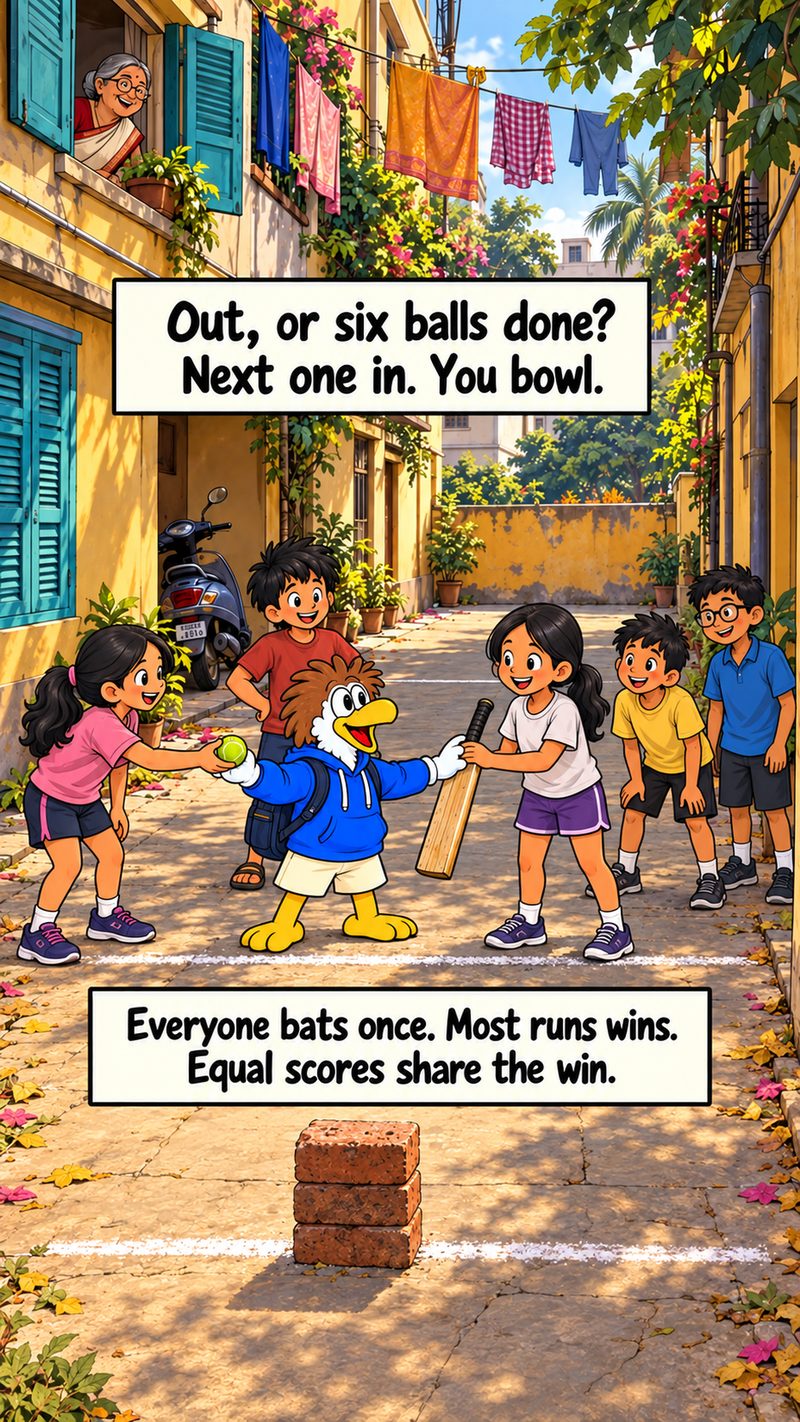
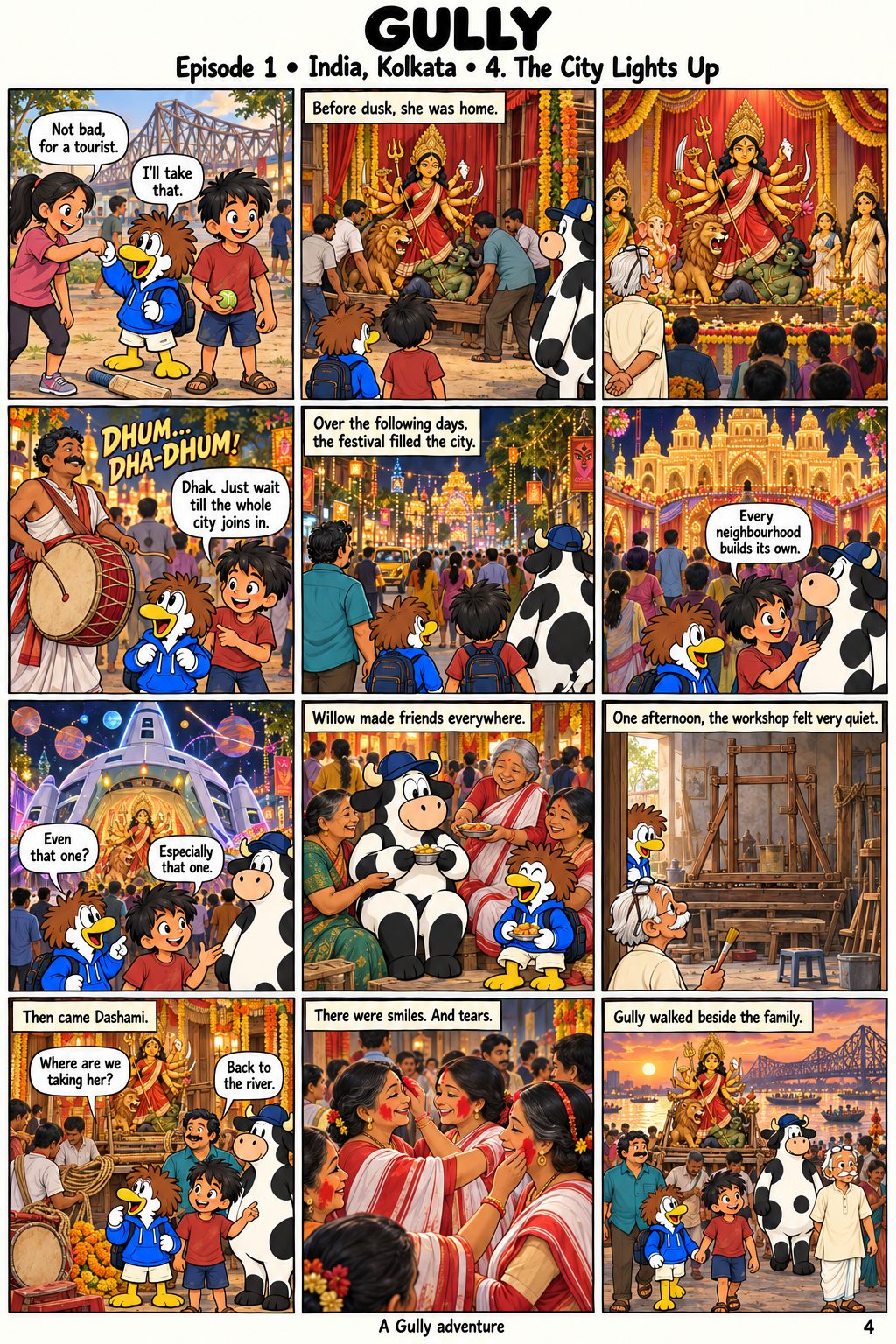
He wasn't, at first, because the rules were different and they told him as they went. First ball's a trial ball, you can't be out. If you hit the pandal, you're out. If you hit the sleeping man under the cart, you're out and you have to go and say sorry. And the big one: one tip, one hand. The ball could bounce once, and if a fielder caught it after the bounce with one hand, clean, you were gone. Gully's second ball, having survived his trial, went off the edge of the tape bat and bounced once and Arko took it one-handed at knee height without appearing to look, and said, out, with great satisfaction, and Gully had learned the most important rule in Indian cricket in two balls. He bowled, and got hit for what would have been six except it hit the pandal, so it was out, so there was an argument, and the argument was clearly the best part of the game for everybody involved. Willow stood at cow corner for two overs, then wandered onto the next pitch over and stood at cow corner there, and nobody on either pitch objected. By the time the men on the scaffolding shouted that they were ready, Gully had scored four runs, taken no wickets, been out three times, and been told by six kids that he wasn't bad, for a tourist, and he understood, standing on the Maidan with the light going orange and a goddess waiting on a cart, that he'd come to the right country first.
They put her in the pandal as it got dark. Six men lifted her off the cart and up onto the stage under the lights, and the men on the scaffolding hung the last of the cloth, and Dadu, who had come across the city on a tram to see it, stood at the back and said nothing and looked at her eyes. Then somewhere behind them a drum started, a big one, carried on a strap and beaten with two sticks, a sound Gully felt in his teeth, and another answered it from across the grass, and another, and Arko said, dhak. The drums. It's started. For five days now, the whole city. Nobody sleeps. Come on. And somewhere out on the river, Gully thought, a dolphin who couldn't see had just lifted her head.
Over the following days the festival arrived properly, and once it had, nobody slept. Night after night the family took Gully and Willow through the city and the city was a different place: every neighbourhood had built a pandal, and the pandals were palaces, temples, a spaceship, a village made of clay pots, lit up and glowing and full of people, fifty million people, Arko said, moving through the streets in new clothes till three in the morning, eating, looking, queuing to see each goddess and arguing about which was best. Theirs, obviously. Gully ate things he couldn't name and liked all of them. Willow was fed by a hundred grandmothers and lay down in the pandal while the men worked round her. And on the one quiet afternoon back in the workshop, Gully noticed Dadu standing a long time at the empty place where the goddess had been, with the brush still behind his ear, and didn't ask.
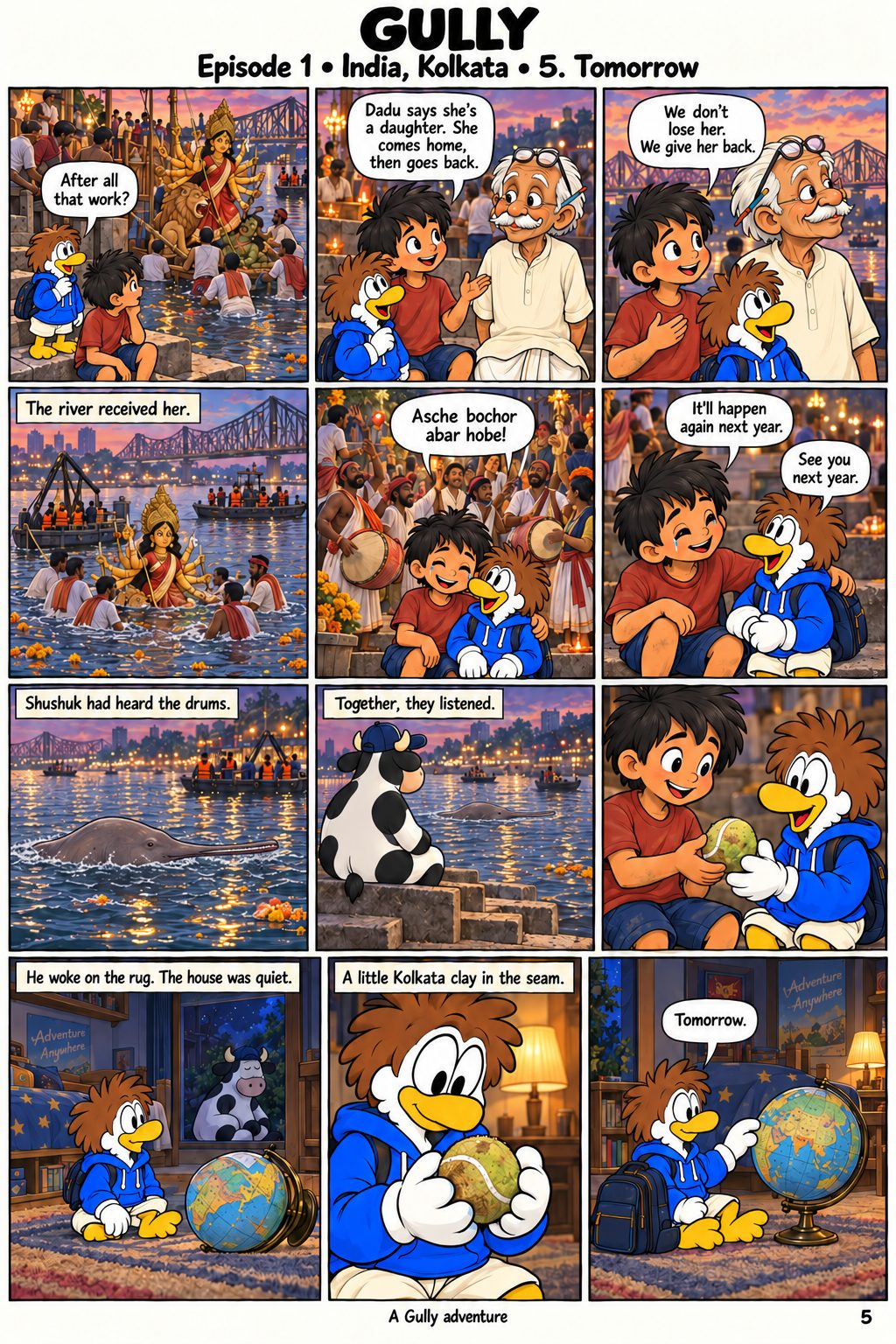
On the last day, Dashami, they carried her to the water. The whole neighbourhood came, with the drums, down through the city to Babughat, where the steps went down into the Hooghly and a hundred other goddesses were arriving from a hundred other neighbourhoods, each with its own drums and its own crowd. The women were throwing red powder on each other and laughing and crying at the same time. The river was full of boats and police and lights. Gully stood on the steps between Arko and Willow and watched them carry Durga down toward the brown water, ten arms and a lion and the eyes Dadu had painted, the goddess he'd held the foot of while Baba tied the rope, and he found he had to say it. After all that work? he said. Arko didn't answer. It was Dadu who did, beside him, in Bengali, and Arko translated without looking away from the river. She's a daughter, Dadu said. She comes home to her mother and father for five days. Then she goes back. Every year we make her again, from the river, and every year she goes back into the river. We don't lose her. We give her back. And they lowered her, and let go, and the river took her, slowly, the way it had given the clay in the first place. The straw skeleton floated. The clay went home. And the whole ghat, all of it, every voice, shouted the same thing at the water, over and over, a thing Arko shouted too, with his fists up and his face wet: Asche bochor abar hobe. Gully didn't need it translated but Arko did it anyway, grinning, crying, pulling him down the steps to the water. It means it'll happen again next year, he said. It means see you next year. Everybody says it. Every year.
And then, out past the boats, in the dark water, something grey came up. A long snout, a small blind eye, pointed exactly at the drums. Shushuk had come. She'd followed the sound across the whole city, the way she did every year, and she lay on the surface with the lights on her back while the drummers beat and the goddesses went into the river one by one, and Willow waded in up to her knees and stood beside her, and the two of them listened to the drums together, and Gully, on the steps, with a tennis ball in his pocket that Arko had pushed into his hand without a word, said it too, to the river and the dolphin and the city, because it was the right thing to say and because he already knew he'd be spinning the globe again. Asche bochor abar hobe. See you next year.
He woke up on the rug. The globe was on its side where he'd left it. The house was quiet. Out of the window, in the Albany dark, Willow was asleep in the backyard with her hat on, where she had not been when he'd shut his eyes. Gully lay there for a while with the drums still in his ears. Then he put his hand in his pocket, and there was a tennis ball in it, worn grey, with a bit of Kolkata clay in the seam. He held it for a long time. Then he reached out, and set the globe upright, and put his finger on it, and didn't spin it yet. Tomorrow.